
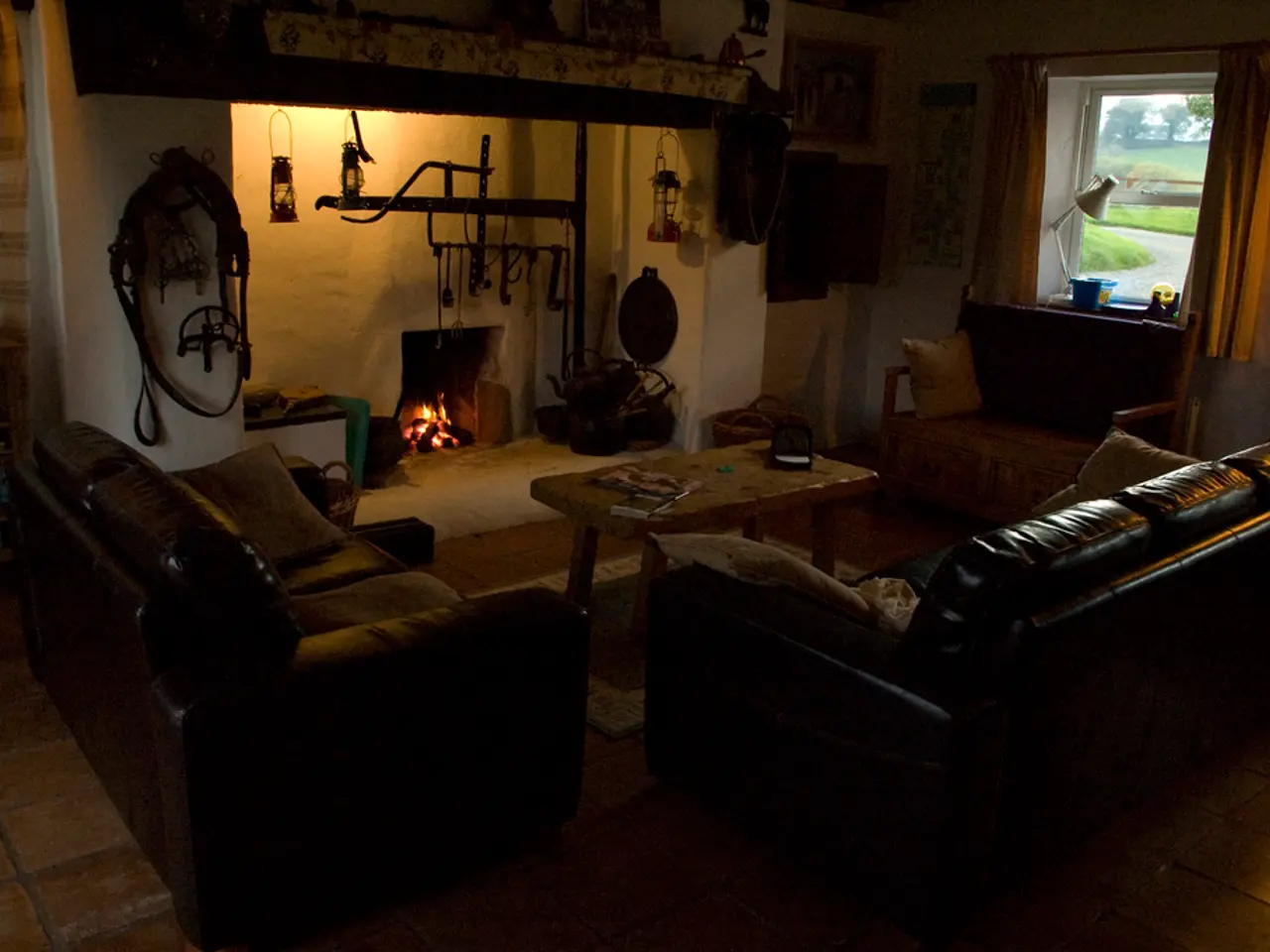
Enhance indoor ventilation by swapping out curtains, rearranging furniture, and modifying the layout of your home
A well-designed home isn't just about aesthetics; it's also about promoting good airflow and improving indoor air quality. Recent studies have shown that a well-ventilated home can lead to improved health, cognitive performance, and even lower energy costs.
Furniture Placement and Layout
Arranging furniture strategically is crucial. Large pieces placed in front of vents, windows, or radiators can obstruct airflow, reducing HVAC efficiency by over 25% and causing uneven temperature and stale air pockets. Opting for open layouts with minimal physical obstructions promotes better air velocity and circulation, enhancing ventilation and indoor air quality [1][3].
Curtains and Window Treatments
Heavy or floor-length curtains that prevent windows from opening or obstruct air pathways can limit natural cross-ventilation and fresh air entry. Choosing lighter, more breathable window treatments can support airflow without compromising privacy or aesthetics [1].
Vent Placement and Design
The location and type of vents play a significant role in how air moves through rooms. For example, ceiling vents are often better in warm climates to allow cool air to sink, while floor vents heat better in colder areas. Interior design must accommodate proper vent clearance—typically 10-12 inches—around furniture to ensure efficient air delivery and return [1][5].
Materials and Finishes
Choices such as siding materials and their installation affect the home's overall ventilation. Siding that traps heat or moisture can create stagnant air pockets and contribute to mold growth. Properly spaced and ventilated siding facilitates air movement around the home's envelope, indirectly improving indoor air quality by reducing moisture buildup and overheating [2].
Flooring Choices
Choosing breathable flooring alternatives like oak, bamboo, or cork can help promote cleaner air and better circulation throughout the home. Low-pile rugs allow for increased airflow and are easier to clean compared to thick, wall-to-wall carpeting [4].
Maintenance and Cleaning
Regular vacuuming with a HEPA filter vacuum helps prevent dust and grime from recirculating in the air. Keeping large furniture pieces about 6-12 inches from the wall allows air to move behind and around them [6].
Education and Resources
For those interested in learning more, the Household Management Science Labs offers courses, certifications, podcasts, videos, and other tools related to air circulation [7].
By making these simple design changes and understanding the impact of interior design on airflow, homeowners can create a healthier and more comfortable living environment while reducing energy costs and the risk of indoor air pollutants.
References: [1] Good Indoor Air Quality (IAQ) - U.S. Environmental Protection Agency (EPA) [2] Ventilation - U.S. Environmental Protection Agency (EPA) [3] Open Layouts and Indoor Air Quality - University of California, Berkeley [4] Carpet and Indoor Air Quality - American Lung Association [5] HVAC Design and Airflow - American Society of Heating, Refrigerating and Air-Conditioning Engineers (ASHRAE) [6] Furniture Placement for Better Air Circulation - Energy Star [7] Household Management Science Labs - Air Circulation Resources
- Efficient household management can be achieved by incorporating strategic furniture placement, optimal vent placement and design, and breathable materials into home interior design, leading to better airflow and, consequently, improved health and cognitive performance, as well as lower energy costs.
- Life management practices extend to promoting health-and-wellness within the household by paying attention to fitting ventilation systems with the right environment, such as installing ceiling vents in warm climates, and selecting breathable flooring alternatives like oak, bamboo, or cork for better circulation and air quality.
- Fitness-and-exercise regimes can be integrated into a well-designed lifestyle through maintenance and cleaning practices, such as using HEPA filter vacuums for regular cleaning and positioning large furniture pieces away from walls to improve air circulation, ultimately contributing to a healthier and more comfortable living environment.